Showing posts with label things to apply. Show all posts

Thursday, March 3, 2011

It's Not A Psychological Disorder

today's weather: BASELINE
anxiety : o
agitation : o


An older lady-friend of mine who happens to be counseling a bipolar asked for my input earlier today. This friend of mine is already a well-equipped, well-trained and experienced minister, but she needed some first-hand info on what being bipolar is like, and what sort of "tools" can be used for this condition.

My collated thoughts on the subject inspire tonight's blog entry. :)

One of the first thing I tell people is that it's not a psychological disorder, though it is often classified as one. More accurately, it's a biological disorder that manifests itself like a psychological one. A more understandable term would be mood disorder - i.e., there is an abnormality that affects a person's moods. Just the moods, emotions, dispositions. It is not a malfunction of cognitive functions such as logic, learning or memory. This is an important fact. You'll see why in a while.


The main tools in navigating through bipolarity:
  1. Take the prescription.
  2. Identify and avoid the triggers.
  3. Identify and apply coping methods.
  4. Surround oneself with caring relationships.

Because it's not a Psychological Disorder ...

Because bipolar mood is not a psychological disorder, one's intellectual and mental sides are intact and very functional (unless of course the condition has been untreated for years, remained in extended episodes and swung into psychoses). A bipolar's emotions will definitely get screwy, but he can still get a better handle on the condition by engaging the part of the brain that handles logic, information, and so on. Though nothing can be done about the emotions, some action can be done to adjust one's general attitude and behavior.


1. using knowledge / information

What has personally been helpful to me is gathering relevant information about the condition. The more informed I got, the better-equipped I became.

Sources of information:

(1) A doctor of Psychology.
He will have a professional, clinical opinion. This is so as to address the issue properly.

Some people think it's fashionable to flippantly tag themselves with disorders - neat freaks say they have O.C.D., teenagers with fixations call themselves psycho, emotional ones call themselves bipolar - even if they really aren't. A doctor can help to identify if there really is a chemical imbalance going on, and prescribe necessary drugs, maybe some therapy or coping skills.

(2) Medical data. Find articles, facts and resources. It's easier these days thanks to Google

(3) Other bipolars.
Though they aren't professionals, they have actual experiences, not just book-based theories. A doctor provides the framework of the condition, research gives the general form, actual bipolars fill-in the colorful details.

It has personally been helpful to me to exchange thoughts with other people who have been diagnosed, as well as reading blogs by bipolars.


2. using analysis and application

All that information is useless if I can't apply it to my life. That's where more left-brain skills come in: I am to sort the information and see how it applies to my particular situation.

For example - My doctor told me to identify the triggers, so I observed what upsets me and took notes. I shared my notes with my husband, sister and close friends so they can help me avoid them.
I came across a mood chart on the internet, modified it to my needs, printed it out and started using it. With a visual prop, I was able to track my patterns and anticipate mood swings.


3. using observation


What to observe:
- What upsets me / excites me?
- What calms me down, or helps me to stay as near as possible to baseline?
- What patterns do my mood swings have? When, how long, etc.
- In which thought patterns do I usually get stuck at?
- Am I exhibiting symptoms of elevation /depression, and what do I need to do if ever?
- etc.

I take note of these and apply necessary information and coping methods. I've shared the info with people close to me too.


4. using memory


It's good to remember what I learned and what I need to do. I know my memory isn't as good as it used to be, so I put some of my notes in this blog, tagged for easy reference.

I'm a Christian and I live by the Word of God. Though I'm not as sharp as I used to be at word-for-word memorization of scripture as when I was young, I've made it a point to commit Biblical principles to my heart and mind. I've compiled and paraphrased a list of scriptures which I have found helpful to combat negative thought patterns.


5. using logic

Logic of course will only apply if you have information.

During depressions, brooding can get the best of me, so that is a good time to force myself to be logical. It doesn't take away the emotion, but it exposes the unnecessary drama and makes things a bit more tolerable (You can call it suppression. Some counselors may discourage that, but it helps me to function until I am more able to deal with the problem properly). For example, when I spiral down into self-pity, forcing myself to think it through would help me to identify that my vile conclusions could be based on some misunderstanding or a perceived though unconfirmed rejection, and I would see that it is therefore unfair to myself to drag me down over something so trivial.

Rational thinking is also very helpful in more extreme episodes when I hear noises. Because I know that they are not real, I don't entertain them, and they don't affect me, and I don't go all schizo.

It's logical thinking and pre-made decisions that keep me from killing myself - or anyone for that matter. Despite all the fantasy suicides and murders I've concocted since childhood, none of them were ever successfully carried out because my mind tells me, that is wrong, God disapproves of that, I may be eternally punished for that, I will not do that, I promised my husband I will not do that, people who depend on me need me to stay alive, and so on.


6. using discipline

Employing any and all of the above effectively needs some degree of discipline. I think that speaks for itself.


So there. I'm good. Ending with another quick, sloppy ending.

Friday, November 26, 2010

gotta get me some happy food

today's weather: SLIGHT DYSPHORIA?
anxiety : 1 | agitation : 2

Woke up all bitchy snarky. Had an immense hunger due to eating dinner too early last night and not finding enough ice cream to pig out on while watching the telly. Became overly upset at seeing that there was no food for breakfast, that the toilet cover was up and that someone left the laptop on while signed in to Facebook.

Today I've been thinking about food (I mean, aside from thinking over random things I've been obsessing over the past few days such as the Maguindanao Massacre docu on history, the RH Bill and my future [imaginary as of now] new home). I suppose it follows since I was soooo hungry this morning, but even after I had lunch I was thinking of food. Happy food in particular.

I've heard and read that certain food items, when eaten, can affect brain chemicals and in effect make a person feel lighter, maybe even cheerier. Been thinking it'd be a good idea to feast on those thing during the depressed and / or dysphoric phases (like right now).

HAPPY FOOD
chocolate (dark)
spinach
(and other dark green leafy veggies)
turkey
walnuts
eggplant
strawberries
mango
cherries
pineapple
grapefruit
banana
papaya
avocado

FOODS THAT DON'T REALLY INCREASE THE HAPPY HORMONES
BUT MAKE ME FEEL HEALTHY AND THEREFORE GOOD
tomatoes
tomato juice
chilled, natural grape juice
mint leaves
jellyace
cream cheese

FOODS THAT ARE NEITHER HAPPY NOR HEALTHY
BUT MAKE ME FEEL GOOD ANYWAY

ice cream
jellyace
marshmallows

HAPPINESS-INDUCING ACTIVITIES
TO COUPLE WITH EATING HAPPY FOOD
brisk walking / exercise
hanging out with happy people
watching / reading humorous things
getting enough sleep / going to bed early
taking vitamins
playing with the bunnies or dog
keeping skin healthy (because having bad skin can br stressful in itself)
sunbathing in early morning sunshine
little hobbies

Wednesday, November 10, 2010

A More Healthful Sleep-aid Alternative?

today's weather: B A S E L I N E
anxiety : 0 | agitation : 0

I had a severe craving for sweets last night and we unfortunately are not in the habit of storing snackables. I was too wound-down to run outside to grab something, so I resolved to be creative with what was available. I made a mental list of possible ingredients in the kitchen cupboards - sugar, honey, evaporated milk, vanilla extract. I thought of making butterscotch syrup but realized we were out of butter.

I remembered we had a lot of cocoa powder and a few sachets of instant coffee. Hmmm. I then instantly craved a mug of hot chocolate. Or perhaps a glass of iced mocha. Excellent idea. I mulled over it for several minutes before I finally decided to make some.

Why the extralong mulling, you may ask? While a cup of cocoa or mocha is definitely a good quencher for a nighttime sweet-tooth - and a relatively easy one to make too - my main problem was that the chocolate and/or caffeine would surely keep me awake for several more hours. And I didn't want that. Especially since I didn't sleep at all the night before. I could take my sleep-inducers, but I know from experience that my sleep meds are no match to stimulants taken so late in the day.

Suddenly I had an inspiration: I'm aware that a bottle of rum sits in the cupboard. My dad sometimes adds rum to his special-occasion baked chicken recipe so we often have a bottle handy.

I thought it would be a great idea to go irish. Why not? The relaxant would nullify the stimulant; it would give an extra flavor kick too. Wonderful. So I made me some mocha frappe with a drop of rum. Really yum. I had two extra-large glasses. And true enough, the caffeine didn't overpower the Benadryl, and I had no problem falling asleep that night.

Which led me to another bright idea. As I washed the day off me, I considered the probability that a shot of red wine before bedtime is a more healthful sleep-aid than my usual pill-cocktail.

Drinking a small amount of red wine daily has health benefits.

Meanwhile, taking a large amount of pills every night (which I am currently doing) has side effects. It will even eventually take the toll on the liver (a fact I have been starkly aware of lately and obsessing over, since my father-in-law recently lost his battle with liver cancer).

I know that this would probably seem like an excuse to be alcoholic - especially considering I am bipolar and therefore addiction prone - but I have a good amount of discipline and self-control, plus a husband who will not likely allow anything remotely resembling an addiction.

Besides. It's not like our income can afford an addiction to something so not-cheap. *Snicker*

So anyway. Yeah. Why not? Red wine instead of my usual bedtime concoction of drowse-inducing pills. I imagine a lot of narrow-minded conservative Christians (who believe drinking any form of alcohol is sinful) would shake their heads at this. Heck. I am already dependent on drugs and sleep aids; how much more "immoral" would it be if I relied on a bit of antioxidant-rich, heart-beneficial red wine?

Thursday, September 9, 2010

It's Not About the Drugs

today's weather: B A S E L I N E / N O R M A L
anxiety : o | agitation : o


Lithium-free, nine months and counting. No major episodes and loving it.

I hope not to attract any ire for my decision to stay away from my drugs this long, but I probably will, and that's understandable. I just need to do this because Lithium has been more harmful than helpful, and I'd prefer not to experience the side effects.

I don't despise drugs; I'm not one of those flaky, overspiritual Christians who think it is wrong to trust in medicine. I do take meds, I do see doctors and do take treatment as needed - I just prefer to use them without being dependent.

Besides, what's the point of medicine that suppresses one symptom but produces others? Like if my Lithium supposedly muffles the mood swings but heightens the risk for neurotoxicity and poses dangers during pregnancy (not that I intend to be pregnant soon, but just in case it happens, right?), I think I'd like to stay away for a while. For a while.

I do plan to go back on Lithium, particularly when I work again and expose myself to various triggers. But for now that I'm mostly just chilling, I'd rather save money (thirty bucks' worth of drugs a day can really burn holes in your piggy bank, so no thank you, not right now) and save my precious brain cells.

I was talking with a friend some time ago about how good it's been without Lithium so far. Of course I do benefit from taking meds, but I find that surronding myself with loving, supportive relationships is far more helpful and beneficial. Meds are great and all, but they are not the only solution, and I don't even think they are the best.

I quite think it's an unhealthy attitude toward drugs to treat them as a cure-all - Feeling sad? Drink your meds. Feeling energetic? Take your meds. You worried about something? Take your meds. PMS? Take your meds. It's not like problems will go away if you "take your meds".

Poking around and doing research about Bipolar Mood, I learned that one of the top treatments is loving relationships. If a person for example does take his drugs but is constantly misunderstood and rejected by the people around him, a pervading sense of insecurity becomes a permanent stressor in the background of his daily life, which turns even the most minor triggers into major catastrophes. Even with the meds, there will be a lot of drama. I noticed that bipolars or depressives who tend to be heavily dependent on meds are those who don't feel very loved by their families. Often spouses or parents of bipolars could be insensitive, thus unknowingly and carelessly worsening the condition. If all they do is isolate the "crazy person", complain about his mood swings, refuse to understand him and adopt a "take your meds" mentality, it creates a whole toxic, suicidal, murderous atmosphere for the bipolar, which he ill surely act out on.

I'm not saying that all those who take meds are rejected by their families. I'm talking about those who depend heavily on drugs, those who feel like medication is their only hope. There are those of course who have good relationships but have a high-stress job or lifestyle, and need the drugs to curb the swings - but they aren't as hopeless and resigned as those who have a sense of security in their closest relationships.

The bottom line is that family and friends play an important role. If a bipolar feels safe, loved and wanted, it makes a lot of difference.

I'm fortunate that I have caring, supportive family and friends. I've cut off the toxic relationships, and stayed away from that environment which has a lot of overhanging and underlying rejection and intolerance. That did more good than the Lithium ever has. As long as I feel secure, I can handle the triggers.

Thursday, March 26, 2009

a week's trip to the blue-violet territories

severe elevation | high elevation | moderate elevation | slight elevation | stable | slight depression | moderate depression | deep depression | severe depression || anx: 0, agit: 0


One week from posting the previous entry in which I supposed I might not be going into a depression, I can say right now that i really did sink into depression the past week. Luckily I've been able to stabilize today, but I was certainly a wreck yesterday. In the past week, I was unfortunate enough to receive a volley of one stressor after another, after which I was the site of an H-bomb drop, so blam, I got wiped out. No signs of life. I was buried into the blue-violet territories and felt like something inside me died. I went to sleep bawling and woke up howling; I refused to give the day a chance. I came up with a new suicide plan, and since I wasn't up to actually carrying it out, I proposed pretending to be dead instead. I was in a moderate-to-deep depression.

I had to resort to the heavy-duty coping techniques: I asked the Hubby to take a leave from work so he can stay home with me. I asked him to talk with me constantly. I asked for a massage. To cheer me up enought to get me out of bed (it was already noon and I was still in bed), he put bunny-friend Davey on my pillow. We kept the television on even if I totally disliked the programs, just so I won't entertain my thoughts.

As I sat alone, listless at the breakfast table in an otherwise empty room, I thought about how easy it is to be bitter when one is depressed. Even over things one wasn't upset about previously. Depression is such fertile soil for rumination and obsession and destructive thought patterns. Darn it.

And I 'd just like to say that it's next to impossible to be a good, consistent Christian while strugling with bipolarity. It's so frappin' frustrating. And what's extra disappointing is that other Christians aren't much help because they don't know much about it. But I'm not going there ...

Anyway, about my deadly ruminations, I gave myself two simple but profound words: Let Go. I took my cues from the Callie Torres character in the Grey 's Anatomy Season 4 rerun that I just recently caught on cable. Just freaking let go. i.e., Drop it - whatever it is. Try not to obssess about it. Cry about it as hard as necessary and then get over it. Easier said than done of course, but I have to start somewhere. Besides, i thought, I won't be depressed for long and when I snap out of it, whatever i was obssessing about probably won't even matter (At least, not until the next episode...)

Well, it seems to work. For now anyway. So far so good. And I don't think I've had any headaches today - and that's good, of course. I'm feeling a bit more energetic too. I think some people have been praying for me as well (Whoever you are, thanks guys). I'm hoping I won't sink back into the bues after today, but if ever I do, the Hubby and I will be making a battle plan.

I'll be keeping the yellow pills within easy reach of course.

Sunday, December 28, 2008

'Peace' and 'Joy' Are Just Words On Greeting Cards

severe elevation | high elevation | moderate elevation | slight elevation | stable | slight depression | moderate depression | deep depression | severe depression
anx : 1 , agit : 2


Impromptu art for this post by Me.


Not that I 'm cynical toward "the Season of Peace and Joy"; it's just that peace and joy are tricky abstracts for a bipolar. For one thing, due to the constant mood fluctuations and the anxiety and irritability involved, peace and joy are elusive.

Bah humbug
.

A lot of times, there is no peace, but constant anxiety in the background.

A lot of times, there is no joy, not even in slightly manic episodes.

For myself specifically, I experience a mere 4 to 8 weeks of normal / stable mood per year (this is according to the data I recorded through the use of journals and mood charts in the past three years).

For a Christian (such as myself) who values things such as inner peace and joy, the above facts are often a source of condemnation, more from others than from myself.

Peace and joy, like love, are often associated with feelings. I've just had to educate myself (and those around me) that these things are not necessarily the feelings themselves. Especially not for a bipolar, who will never get the feelings right. I've learned from church that love is not an emotion, but an action in which one acts lovingly toward the other, with or without the feelings. Now I'm coming to believe peace and joy can be the same way - they aren't feelings, but attitudes that cause the feelings. It's still kinda blurry for me right now to explain this theory well; I have to work on it further.

A few years ago, before I even knew what bipolar is, I wrote something about how feelings are shifting and unreliable, and thus shouldn't be the foundation for anything. This should be especially true for a manic-depressive, whose emotions are more extreme and shifts are more pronounced. For things that are normally associated with feelings, I believe we should learn to define them without the feelings and usual emotional manifestations.

Friday, December 12, 2008

There's No Such Thing As "Upset"


slight dysphoria
anxiety : 1
agitatedness : 1


I pondered on some stuff I recently read in the blog of a woman who lives with a bipolar husband, and something something that I heard on Oprah in one of those episodes on Bipolar Mood.  Here is my reaction paper of sorts.

People who live with bipolars have a lot to complain about.  I don't blame them; we bipolars are really difficult to deal with and it's easier to just dismiss us leave us, or stuff us with sedatives so we wouldn't be such a pain in the ass.  While those courses of action keep things civil at the surface, they're not really the right way to deal with things because it resolves nothing, it stops nothing, and creates nothing good.
 

The first step in dealing with anything is to be informed.  If you live with a bipolar, it's counterproductive to just rant and blame.  Instead of just wishing that your mood-swingy loved one would change (or die) for your benefit, you have to be a part of the solution too.   It's very unfair to impose rules of behavior on them if you aren't willing to change your behavior yourself.  There are some things you and need to know and keep in mind.


One of the biggest complaints about bipolars is the anger.  Related to that is  impatience, irritability, crankiness, snarky language, and so on.


Here's what you have to understand:
For a normal (not that we bipolars aren't normal), hormonally-balanced person, being upset is just "being upset".
For a bipolar, particularly in an episode, there is no such thing as "upset".There is no such thing as a "minor irritation".
"Upset" can mean having a strong urge to destroy something or hurt someone.
"Upset" can mean offended to the point of hopelessness.

I'm not kidding.
For a "normal" person, anger is a strong, potentially violent emotion .
For a bipolar, anger is a violent, explosive emotion. In a lot of cases, there isn't even such a thing as anger, just rage.

There's no point in wondering why their anger is often not proportional to the situation. 
You have to understand, it's hard to control.  It's just there, and it has to go somewhere.  He/she needs to express it somehow, and you have to help/ him her find a way to do that in the least violent manner possible.  Be firm if you must, but don't react to his/her anger with more anger.

It even might have nothing to do with you, so don't take it personally.  And yes, a bipolar in a manic episode can be happy and angry at the same time.

Can't imagine that? Just think of this guy
:
"Let's put a smile on that face!"


There's nothing to fear though. It's not sociopathic; just manic.
Nothing personal - it's just hormonal.
Nothing psychological even - just biological.


How to avoid angry episodes:  As much as possible, you have to work together to avoid all possible triggers. Know what those triggers are - substances, situations, even specific persons - and help keep your dear bipolar far away from them.
When a bipolar is already enraged, there's no point in telling him to "calm down" because that isn't going to happen.
It's like telling the Incredible Hulk to chill.  Like he'll listen.


"You won't like me when I'm angry". Indeed.


Chances are, when you need to tell him / her to calm down, it's already too late for that, so you have to be ready with another course of action.


What should be done? The necessary thing to do is to remove or deal with whatever caused the upset / anger in the first place.  If it's a situation, find a quick escape route.  If it was caused by a person, confront that person before the bipolar does; it will be less bloody that way.

If the upsetting agent was you, just apologize.  Even if it's not your fault, just to pacify things, but bring it up again when he/ she is in a calmer, stabler mood so you can tell him/ her about what upset you (this is so you can have a healthy relationship).  


The chemical imbalance is due to a biological fault; the episode can't be combated by mere mental manipulations like debating or over-explaining.  Retaliating with more anger will further agitate your bipolar loved one, and he/ she will have no trouble releasing a barrage of verbal attacks that will decimate your self-esteem in no time. Take my word for it: shorten the war as soon as possible; employ a temporary peace treaty whenever applicable.

Avoid enraging the hulk to avoid engaging him. I can't emphasize this enough: Keep away from every possible trigger.


What works for me

Every bipolar is different, so you have to find out what works for the particular bipolar in your life.  In my case, "calm down" is not only useless; it's insulting (because it makes me feel like you see me more of a problem than a person).  It will only produce the opposite effect, and I will direct my anger at the person who said it.


I personally have found it very pacifying and much more beneficial to hear someone say, "I'm sorry," It's my fault," "I'll take care of that for you," or "I love you".
Let me just say I'm not trying to make excuses for our ugly behavior; I acknowledge my own tendency to be hurtful, I'm a huge jerk too, I swear, and I'm not proud of that.  The things I do aren't (always) intentional, and I am willing to make the necessary amends and amendments. I am just stating facts that other people probably need to consider before throwing unnecessary judgment and expectations .  

The behavior can be controlled but the emotion cannot, and that makes the behavior a little more difficult than "normal" folks can possibly imagine. It's not at all pretty, but heck, it's a reality.

It would be helpful to remember that a bipolar's volcanic eruptions thrown your way may really have nothing to do with you. But whether you like it or not, you're in the lava flow, so it would be best to know what you have to do

A big, fat
sorry for your luck to people with the condition, or to those who live with bipolars in the family - but your love just has to be bigger than the disorder.
And oh, it's not a "dis-order" by the way; it's a different kind of order, something normal to those born with it.

Wednesday, November 5, 2008

Well-known Bipolars


It's quite inspiring that a lot of greats and geniuses were bipolar - they've made some spectacular achievements in their lifetimes, some of them even without ever overcoming the condition. It has been noted of course that the swings into elevation and depression can cause one to be brilliant, sensitive, multi-talented even genius-prone. You'll see what i mean in a while.

This, by the way is not the least bit an exhaustive list; I only included here the people I like or at least find interesting.


Poets

A lot of the poets I like were bipolar. I can see how the so-called "illness" creates a vast, deep well of emotion and imagination from which they they drew.
I can guess these guys were especially introspective but verbally expressive and poetically prolific during a prolonged episode, (snicker) - I know I'm like that.

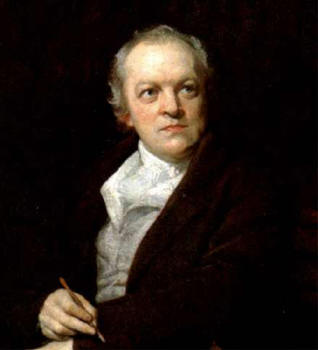
William Blake (at left) for one, whose verse provided an inspiration for my artwork when I was a teen. Blake was a noted not just as a poet but as a painter as well .

The idol of his times, the passionate, extremely talented (and dreamy) George Gordon Lord Byron (at left). It's not hard to imagine, with his various neuroses as well as his swings from wanton "I will live as i want" behavior to world-weariness and back. The disturbed antiheroes Byron thought up were actually reflections of himself: confident, talented, attractive ... and disturbed.

Alfred Lord Tennyson
, Walt Whitman, and Robert Frost , some of whose verse I've loved and memorized, were all manic-depressive.

Ralph Waldo Emerson
too (whose quote happens to be emblazoned on the cover of my current journal). Samuel Taylor Coleridge , T.S. Eliot, Gerard Manley Hopkins and Charles Pierre Baudelaire were as well.

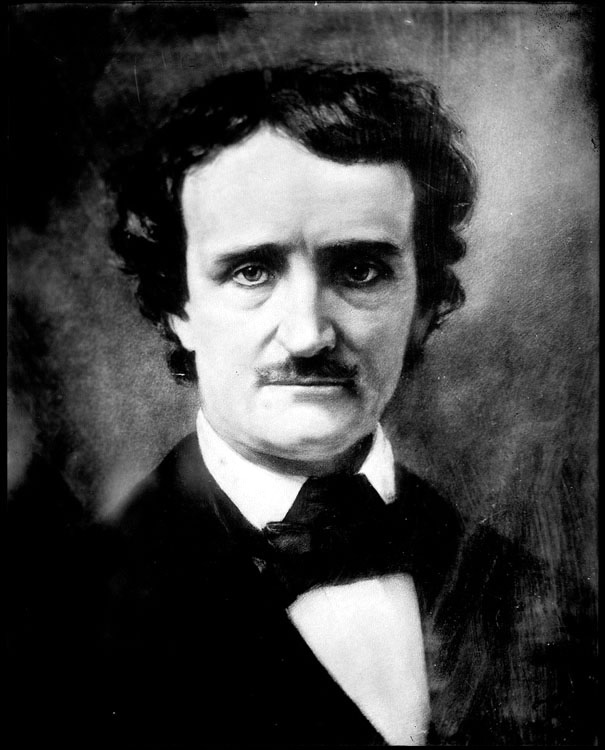
I can especially imagine Edgar Allan Poe (at left), with his dark, ingenious ruminations. I don't think anyone would disagree the guy had some serious depressions.

Sara Teasdale and Emily Dickinson too - who would have known?

Sylvia Plath obviously was, and clearly had her creative bursts during her melancholia.


NovelistsSamuel Langhorn Clemens, a.k.a. Mark Twain whose popular works are relatively easy to read and pleasant.

Victor Hugo
, who went for heavy, thought-provoking and almost-oppressive.

Virginia Woolf was called "crazy" - schizophrenic and bipolar, but it was those disorders, me thinks, that made her a literary genius.

F. Scott Fitzgerald is another noted novelist. His stories featured Byronic heroes too.

Others are Charles Dickens, Hans Christian Andersen, Robert Louis Stevenson, Ernest Hemingway and Leo Tolstoy.


Painters

One of the original Renaissance Men, Michelangelo (at left) was a multi-talented, prolific, brilliant, extremely inspired, iconic . . . indecent, impetuous, problematic, unpredictable, mood-swingy, disturbed bipolar.

The afflicted painter, Vincent Van Gogh had a conglomeration of disorders, including BMD. Van Gogh made his greatest works in the last year of his life, one after another in rapid succession through a wave of creative genius due to a manic episode. When he came down from the elevation and entered into a depression, he shot himself.

I know from bits of research and from personal experience that the transition from mania to depression is where the sufferer is most suicide-prone; if a bipolar isn't medicated and/or covered by caring relationships, a suicide is most likely to happen during the transition. I suppose that's what happened in Van Gogh's case.

Expressionist Edvard Munch of "The Scream" (at left) fame was another disturbed one. I first learned about him from a documentary I watched as a child; I instantly found him both fascinating and frightful. I don't know any of his other paintings, but The Scream has made a great impression on me. I'm drawn by the undulating unsettledness in his composition and the story (said to be) behind it. I recall pitying him for being manic-depressive - of course at that time I didn't know I was as well .

There's a female painter in this list - Georgia O'Keefe. I don't know much about her, but from what I remember from what I learned in Art History she had this preoccupation with vaginal forms.

The disturbed Jackson Pollock was also said to have bipolar, or something similar.

Just a thought: Why is it that most great artists were so tortured?

I have this theory that some of those in the artistic field probably would not have achieved everything they did if they weren't so disturbed. Though psychosis is not a prerequisite to genius, it can contribute. BMD is certainly debilitating, and I'm sure it was in a way for those artists. But I got to thinking that those artist and writers were so good because they were bipolar. Without the mood cycles, they probably would not have produced such dramatic work.

I know personally how bipolarity can swing one into great confidence and vision, wild creativity and inspired genius, as well as whirlwind productivity. So while the condition is inhibiting, on one end it is also inspiring.


Musicians / Composers
Both Wolfgang Amadeus Mozart (at left) and Ludwig Van Beethoven (far left) were manic-depressive. Their names have stood out throughout music history due to their ingenuity.

One thing remarkable about Beethoven was his ability to convey clear, powerful emotion. I find it funny that I was entranced listening to a Beethoven some time ago and I made a joke that I think he was bipolar, based on the sound of his music. I find out later that he really was.

Another bipolar German classical musician was Robert Alexander Schumann.

Frideric Handel was German composer, of the Baroque era.

Composer-pianists Franz Liszt, Frederic Chopin and Pyotr Tchaikovsky all had swings between elevation and depression. I imagine from his music that Tchaikovsky was a bit more manic.


Scientist

Isaac Newton.


Historical-Political FiguresAbraham Lincoln (at left) suffered greatly from the illness. From what I've read, he was more inclined toward depression. History has a deified image of Lincoln, but he had some serious flaws. But he wasn't just a pensive man as our kiddie history books say - Abe was gravely melancholy, severely depressive. His dark moods were so pervasive that it affected people around him. There were times he would be so depressed and fail to show up at important meetings or even get up from bed. He never overcame his depression; it even seems more like he embraced it- and forced others to.

I mused on the thought that someone that gloomy and inconsistent would be the type of employee most modern-day bosses would lay-off first, without consideration. This guy, whose face is on Mt. Rushmore for being one of the greatest-ever U.S. Presidents, was a moody, pessimistic depressive.

Another great immortalized on Rushmore is Theodore Roosevelt. He has been described by biographers to have periods of amazing energy - he walked over twenty miles and read an entire book a day. He was known to be aggressive and ostentatious, as well as prone to social anxiety and depression.

Winston Churchill is another person I quite admire. Remarkable statesman, lawman, orator, historian and writer. A hero of World War II, Dunkirk, Britain's finest hour. I learned that he was an artist too - how cool is that?! Many attribute his excellent abilities to his disorder, which he called his "black dog".

Napoleon Bonaparte, Joseph Stalin and Adolf Hitler had this condition in common. History doesn't hold very rosy images of them, but you've got to give them proper credit for their politico-military genius.

Enormous vision, egotistic ambition, megalomania, anger fits, messiah complex, disregard for others - those are all symptoms of severe elevation / mania. Napoleon, Stalin and Hitler all exhibited it from childhood. It can be very useful for authoritative leadership in small amounts, yeah? But when it isn't curbed, mania can trigger itself into destructive delusion.

Manic episodes cause one to be overconfident, even to absurd degrees; I personally have had those defiant "I will change the world" moments. It's not hard for me to imagine how someone with a good amount of intelligence, influence ad resources can actually channel all his megalomanic energy into making a mark in history. Lithium pills could have made a big difference for the whole world back then, huh?

Trivia: Did you know that Hitler was an artist as well? He made amazing watercolor paintings and charcoal drawings in his youth.

I have this theory that the so-called psychological defect that plagued Archduke Rudolph of the Hapsburgs was Bipolar Mood. He had a great, idealistic "I will save the world" phase to the point that he defied his father and despised the monarchy, and actually had plans on revamping all of Europe, but afterward he lost hope and spiraled downward into an alleged suicide.


Philosophers and Orators

Plato is said to have been manic-depressive, as derivable from what his student Aristotle said about him.

The most notable Christian speaker, Charles Haddon Spurgeon confessed of his moods in his book Dark Nights and Bright Days.

Mary Wollstonecraft, one of the authors of feminism, had a bit of tragedy.

Bipolars are very prone to tragedy. They're also real prone to repulsive behavior.


Modern-day Musicians and Celebrities

Substance addiction and abuse was the bane of many, including Marilyn Monroe, Amy Winehouse and the late great Jimi Hendrix.

90's icon Kurt Cobain (at left) didn't stick to his prescription; he instead chose medicate himself with other drugs. We all know how that ended. He also wrote a song called Lithium.

How about some people who are still alive today:

Gordon Matthew Sumner a.k.a. Sting (at left), who I've always thought is brilliant.

Adam Ant and Scott Weiland, whose unique, not-so-mainstream music helped soothe me through my youth.

Other rock icons: John Michael "Ozzy" Osborn, Axl Rose and Peter Gabriel.


Manic-depressives aren't always so dark.  Take comedian Ben Stiller for example (both his parents, actors Jerry Stiller and Ann Meara also were bipolar). Jim Carrey, Russel Brand and Stephen  Fry also are.


One modern artist that many including myself greatly admire is Tim Burton. I'm not sure how his BMD influences his output, but I think it's cute, the fact that he's bipolar.

Here's another film genius: Francis Ford Coppola.


Add to this long list Linda Hamilton, Catherine Zeta Jones, Richard Dreyfuss, Jean Claude Van Damme, Sinead O'Connor, Robert Downey Jr., Macy Gray, Carrie Fischer, Mel Gibson, Martha Stewart, Connie Francis, Larry Flint, Robin Williams, Marshall Mathers (a.k.a. Eminem), and media giant Ted Turner.  Okay, some of them aren't really good examples, but they're in there.


I'm tickled that I share bipolarity with a lot of the personalities that I happen to like or am inspired by - and I never even knew they had it until recently. Would that be a coincidence, or my tendency to be drawn to those with whom I have some sort of commonality without even knowing about it?

I share a condition with many geniuses, an "illness" so detestable but so able to stoke brilliance. Perhaps after my death, my own name could be added to this roster? I've got the bipolar part; I just have to work on the "well-known" part.

Haha
; better not stoke the mania.

Tuesday, October 7, 2008

The Work Dilem*a

severe elevation | high elevation | moderate elevation | slight elevation | normal | slight depression | moderate depression | deep depression | severe depression || anx : 1 , agit : 1


It's been around a year and a half since I quit my previous occupation, and I'm still not quite sure what I should be doing job-wise.

Just to clarify, I'm not a bum since i actually am doing something productive. I've turned my hobby into a little business of sorts; and of course, on my free time, there's ministry.

But I still feel like I'm not being productive enough.
My skills are highly underused.
My intelligence is not being applied.
I'm not earning much (I might have made the impression to my friends that I'm doing hunky-dory in in my little business thing, but the truth is, I'm not quite)
I have this great sense of stagnation going on.
I basically feel like a great waste in cellulose. Not to mention destiny.

So I get to thinking about finding a job, but I have a lot of things to consider. I don't want to get a job just for the sake of being employed (that's a reason for many people, but I just think it's utterly stupid). I don't want to get into another one that isn't for me. I intend to be in one that I actually like. Now, I'm gonna seem overly prissy, but for a perfectly good reason: Due to the loverly chemical imbalance and my predisposition to anxiety and agitation, it's a bit of wisdom so as to not work myself into another severe episode. If I work job I don't like, I'd end up having to lose it anyway (and if it gets that bad, I might end up in the hospital), so I might as well find something that fits.

  • It's gotta be something that I at least have an inclination for or interest in.
  • It has to be something moral and legal. I'm inflexile on that one.
  • I don't care much about a large income; Hubby is working and earning anyway. My concern is that I earn in proportion to the amount of work I put out, i.e., I don't want a job that makes me feel cheated or overworked but underpaid.
  • There won't ever be a stress-free evironment, but I have to be in one in which I can easily cope. It would be best for me to work where stressors are minimal, or at least controllable.
  • I'd prefer something with flexible hours, or at least with part-time hours.
  • I need one that isn't too strict with schedules and attendance because there will be days that I just can't make it (and when I say can't, I don't just mean "too lazy", "don't want to"; I actually mean unable, impossible) . I am not a lazy person and am very good at meeting requirements, goals and deadlines; I just need a lot of flexibility.
  • I can't get a job that requires me to come in early in the morning. 10am is too early. Trust me; every time I get up too early, I end up with murderous and suicidal thoughts - and i don't mean that in a poetic sense.
  • I shouldn't work late hours because it throws my imbalance further off. A few late nights are fine, but it shouldnt be regular.
  • I will need an assistant, or at least a back-up.
  • I need a sense of reward and / or promotion. I'd prefer to stay away from dead-end bottom-feeder jobs.
  • For that matter, I don't want to be the guy at the bottom of the food chain. I can't afford to be the tambakan.
  • I want something that doesn't clip my freedom to choose, my sense of creativity and individuality. No dress codes, no tight rules.
  • I can't work in a place where there are no people. I want people.
  • But I don't mean a-lot-of-people-all-the-time-everywhere. And not people to entertain in a PR sense.
  • I don't need an impressive occupation, but I'd like something I can be unashamed to talk about.
  • I'd prefer (and it would be wise) to stay away from another self-serving, contemptuous, a*****ic manager who is incapable of communicating, managing or even listening.
  • I don't like auditions or interviews, but I don't mind going through one if necessary.
  • I need access to a whole lot of drinking water, healthful food, comfortable restrooms and something I can lie in when I feel overwhelmed or fatigued.
  • I need a place that is open and considerate to bipolars. Most workplaces discriminate against, and that's understandable.

So see, I'm hopeless, hahaha :D

Well, not really. The best option i see for myself is really to work at home or have my own business. It's something I'm considering, but I'm not entirely sold on it yet. I need to give myself some more time to think and pray about it.