Showing posts with label famous bipolars. Show all posts

Monday, August 20, 2012

leonardo, michelangelo and moi

today's flavor: S L I G H T D E P R E S S I O N
anxiety : 1
agitation : 2


I re-watched this docu on Leonardo di Ser Piero da Vinci on History Channel which rekindled my interest in the Renaissance Man.

I don't think he's my favorite artist, but he's possibly the one I first got acquainted with in my childhood years.  This is due to the fact that my given name is related to one of his famous paintings and a lot of people were keen to point it out.   I suppose I've developed a liking for the painter because he's been a childhood habit. So yeah, maybe he's sort of a favorite, but I don't really want him to be since he's too obvious a choice.

Anyway.

I've come across some theories that Leonardo, like many geniuses, was bipolar.  Of course there's no way to prove that categorically now, but Leonardo sure exhibited the remarkable symptoms:

  • The guy had unpredictable, at times violent, mood swings.  Some people even considered him unbearable.  I can't imagine anyone ever considered him as "nice".
  • He was extremely intelligent and multi-talented.  He wasn't highly educated but he was considered a genius.
  • It was said he was quite introspective, often self-centered.
  • He had spurts of megalomania.
  • He had an incredible capacity for focus.
  • He had amazing creativity.
  • He seemed like a lonely, even miserable kind of person; but he was apparently not self-pitying as seen in the way he was able to push himself to do great things.
  • Due to his mood swings, he left a lot of his work unfinished. Paradoxically, he was obsessive about one work in his old age and never stopped working on it.

I'm nowhere close to his level of genius, but it's amusing, even comforting to see that we had the same character weaknesses [snicker].  Particularly those ones that others detest about me / make me feel guilty over.  This guy was a massive jerk but he's a revered gem.  Not that I intend to cement a legacy of jerk-hood, but Leonardo makes me feel better about being utterly despicable.  And not that I'd like to settle for being despicable either, because I don't really think I am, but I can't stop people from thinking that I am.

By the way, Leonardo's contemporary and rival, the much younger artist Michelangelo Buonarotti is also said to have been bipolar.  He had the same quirks; the bulleted list above would apply to him too.  

Michelangelo tended toward sculpture though, while Leonardo was more of an engineer who was appreciated for his paintings.

I guess the above list would fit me too, I mean if you would change the "he" into "she".  Except the part about doing great things, though.  I haven't really accomplished much in my waste-of-cellulose life, though I'd like to think I will in the semi-near future.  Maybe I'll start by making incredibly detailed - thus unflattering - self-portraits to immortalize my broody countenance.

Monday, January 9, 2012

vincent

 today's flavor: B A S E L I N E
anxiety : 0
agitation : 0

No Benadryl Haze today, thank you, God! 

Over the recent holidays, I marathonned a lot of TV series DVDs, one of which was Doctor Who (2005).  In the fifth season, the Eleventh Doctor and Amy Pond encounter the artist Vincent Van Gogh.  I realize of course that the producers of Doctor Who value entertainment over accuracy and consistency, so I just switched off the nitpicker in me. 

The first Doctor and companion, painted in the style of Van Gogh.
Image from here.

Nonetheless, watching the Vincent and the Doctor episode reminded me that I had long ago intended to make a post on Van Gogh, and that I might as well do it now. 


Vincent Van Gogh would probably be at the top of people's minds when you ask them to name some of the best painters in history.  Art critics would bullshit about his use of color and texture and expression of emotion and blah, and his unique style and yadda.  Art historians would contrast his acclaim with the fact that he was the archetypal starving, struggling artist.   As it was highlighted - and exaggerated - in Doctor Who S5E10Van Gogh's talent was hardly appreciated during his time, and his work was considered rubbish.

That's the sad part about genius, we've been told by history:  it's not uncommon to be celebrated after you're gone.

Van Gogh self-portrait.
Image from here.

Van Gogh was bipolar (and a lot of other things).  Together with his talent, he had horrible mood swings, hallucinations and peculiar habits. I understand why people around him didn't recognize him as a genius.  He was dismissed as a nutcase, and even an idiot.  Some people who didn't know him so well found him unpleasant and disagreeable, but he did have a few good friends who liked him in spite of his weaknesses.

[ Just an interjection: I get why he felt the need to cut off his ear.  I want to do it too sometimes.  Auditory.  Hallucinations. ]

His biography tells us that before pursuing painting, he had trained for ministry.  Though he was passionate about it, he was deemed unfit by religious ethics-police and the doors of destiny were shut in his face. He turned to the only other thing he could do, and he was told he wasn't good at it either. From his own perspective, he would've seemed like a big, fat ginger loser - and that likely just worsened his emotional instability.

He produced his best works in a highly agitated elevated episode that spanned several months, one that followed a deep depression.  After this period of the greatest creativity and productivity, his high began to descend, and then he killed himself.
 

Sure, it was tragic that he was so mentally disturbed.  But I'm pretty certain his art would not have been so intense, and his life-story would not be so interesting if he were not bipolar. 

The more romantically-inclined would say something like he "turned pain into beauty".  No one can be entirely sure of course if Vincent intentionally took his pain and translated it into beautiful images.  What we do know is that pain and beauty coincided in the same unquiet mind.


Monday, August 1, 2011

what do they think when i say i'm bipolar?

today's flavor: S L I G H T D Y S P H O R I A
anxiety : 3
agitation : 1
unwanted ingredients: a sensation similar to depression but not exactly, due to the allergy tabs and the meds for my ailing wrist


I often wonder what people think when they hear the word "bipolar". I wonder what they think of me when they find out I'm bipolar.

I can't help noticing that some have preferred to distance themselves after the discovery - such behavior is evidence that they have misconceptions - and that they're probably bigoted. Often times those particular types are neither curious nor caring enough to be educated. Ptttthh. Well, screw them.

Possibly some of them do get hungry for details, or at least become intrigued by the so-called disorder. Naturally it is easier for them "normal people" to ask Google about bipolars rather than ask actual bipolars (perhaps it's because they'd rather not risk getting snapped at or bitten into by a crazy person). This is most unfortunate, because most articles on the subject are clinical, heartless "professional" opinions that basically just flatten us out into mentally ill patients, with no mention of how fascinating, how vibrant, loving, inspiring, brilliant or amazing we can be.

Furthermore, from searching online, "normal" people will read about our mood swings, our weird behavior, and it will freaking scare them into treading on eggshells. They'll stumble upon news about how this drunken celebrity is bipolar, that misbehaving celebrity is bipolar, and that celebrity who killed him/herself was bipolar. They'll just lump us all together in the Looney box. The more they find "professional" information on BMD, the more they'd get so afraid of our mysterious psychotic aberration, because the more they will be led to think we might just go berzerk on them, slash them to ribbins or do some other thing they'd rather we didn't.

They just don't know that because of the extreme anxiety common to all bipolars, we could be more afraid of them than they are of us.

And truthfully, because of their prejudice and myopia, the "normal" people hurt the bipolars more than vice-versa. It's really not fair to think we're the hurtful ones.


I wonder how they perceive bipolars.

Do they think that all of us are wasted like Amy Winehouse, Lindsay Lohan or Mel Gibson?
... That we're all sick and gloomy like Edgar Allan Poe?
Are they afraid we'd suddenly kill people and attempt to rule the world like Hitler or Napoleon?
Are they thinking we could suddenly pull a shocking stunt like shaving off all our hair a la Britney, or lop off an ear in the style of Van Gogh?
Do they think we're all schizophrenic? Do they even know the difference?
Are they anticipating we would overdose on a mad concoction of prohibited drugs, or execute a dramatic suicide like Virginia Woolf or Kurt Cobain?
Do they think it's always our fault we're like this?

It's a real shame whenever we get written off, especially by those who are close to us. A real frakking shame.


Bipolar Mood is quite diverse.

There's more to it than simply being "a mental disorder with mood swings" - that's an incomplete, unfair, one-dimensional way to look at things. In my opinion, it's not even right to call it a "disorder" or an "illness".

Indeed, all bipolars have mood swings, and we all experience the same common symptoms of depressions and elevations but our cycles vary in intensity and duration from person to person. More about that here.

On top of that, given the fact that individual people are influenced by their backgrounds, natural inclinations and so on, each individual bipolar has different manifestations and his/her own unique triggers.


To over-explain,
  • Though our psychological make-up causes us to be addiction prone, we do not all have addictions. We don't all have problems with substance abuse, prohibited drugs or promiscuous sex.
  • Bipolars may seem eccentric and quirky, but we aren't necessarily crazy, and the hell we aren't stupid. We in fact tend to be very intelligent and talented, often even way more intelligent than most "normal" people. So watch who you call an idiot.
  • A lot of us are poets, musicians, artists and the-other-kind-of-artists, but we aren't all. Some end up as philosophers or politicians.
  • We are indeed depression-prone, but we don't always go degrees darker than the most pathetic emo song. We aren't all broody and moody. In fact, we can be very vibrant and passionate.
  • We indeed have our violent phases, but "bipolar" does not mean "sociopath". Though megalomanic notions are common, not all of us will act on them.
  • We all are likely to have suicidal thoughts, but we don't always end up killing ourselves.

Though many a bipolar has been known to have a tragic existence - or even a tragic end - there are a lot who have learned to cope and even live productive, worthwhile lives.

Many of us are quite amazing -- Teddy Roosevelt and Abe Lincoln, two most widely-acknowledged to be among the best U.S. Presidents ever. Winston Churchill, who was kicka&& at just about everything. The Philosopher we call Plato. The musician we call Sting. Beloved comedians Ben Stiller, Jim Carrey, Robin Williams. Film geniuses Tim Burton, Francis Ford Coppola.

And oh - I almost forgot my favorite bipolar of all. King David, the epitome of awesome.

So if you think about it, them "normals" actually love the work of us with mercurial moods - e.g., they enjoy bipolars' words, music and art; even borrow to express themselves in ways the truly Byronic are able to - without knowing those were made by those they call "mentally ill".

The bottom line is that though bipolarity can get booze-drenched messy to rock star degrees and beyond, our lives aren't always so despicable. The "entire picture" can be tremendously fantastic, and I want people to know that.


I don't know how and when, but I want to be instrumental in changing perceptions toward people with mental conditions, particularly toward bipolars. I'll start by gnawing at my own friends (no pun intended) and making them see that we don't have to be labelled as if there's something wrong with us. We're freaking amazing.

I was born this way, and God makes no mistakes, and I don't need to hide it.

Saturday, July 30, 2011

two types of bipolar

today's weather: B A S E L I N E
anxiety : o
agitation : 0
symptoms of elevation curbed by anti-allergy meds and carpal-tunnel treatment


EDIT: I caught a segment on "happy food" on television, in which a bipolar restauranteur was interviewed re. his passion for making mood-enhancing dishes. Whoever the segment's researcher was, he did a sloppy job of defining bipolar, oversimplifying things, irresponsibly generalizing type 1 bipolar as a "more severe" kind of bipolar, and type 2 as a "milder form". Fuckit, that is hardly accurate and very misleading, because both types can involve extreme emotions and behaviors. Though there are mild or slight episodes,  it is a gross misnomer to say "mild" or "slight" bipolar.
Bipolar Mood is basically characterized by cycles of elevation and depression. Though Bipolars are all prone to violent mood swings, we don't all swing the same way. There are two general types and I'm going to attempt to explain them without the medical-book jargon.


Type I

In a nutshell, Type I has longer, more extremely elevated episodes alternating with shorter depressed ones.

e.g., 2 weeks depressed - then four months elevated - then one week depressed - six weeks elevated - and so on.


It would be significant to know that the longer an elevation is, the longer a person is vulnerable to the triggers. Try to picture this:


bipolar person is in a manic / elevated episode.

|
trigger comes, elevates the episode further
|
another trigger comes, further elevation
|
another trigger, further elevation


So the elevation just keeps getting heightened until triggers are eliminated or until the mood cycles downward. Get it?

Without treatment, the prolonged highs could be catapulted to megalomaniacal, violent degrees.

Interspersed between elevations, depressions still occur. Type I depressions don't quite reach the deepest, darkest depths of despair, but they are extremely vile nonetheless. That is why bipolars (of either type) try to combat depression at the onset, using drugs, alcohol, sex, self-mutilation or whatever desperate measures they see fit to distract themselves. And that is why it is necessary for them to seek professional help.

Due simply to the longer elevations (and because elevations introduce a feeling of invincibility), those with Type I tend to be more prone to bad decisions, destructive behavior and substance abuse. They are also less likely to seek or accept help; i.e., when you try to make them go to rehab, they'd likely say No, No, No. Here's why:
  • In an elevation, a bipolar feels absolutely super. Overly positive, sometimes to the point of denial; overly self-confident to the point of megalomaniacal. 
  • They may even insist they don't have a problem. Since they stay longer in elevations, it takes a longer time for them to come down and be remorseful of unwise decisions. 
  • They won't let themselves go down (explained earlier), so sometimes the remorse won't come at all. By the time their emotions are lowered, their minds would be so addled with regulated substances and there wouldn't be enough clarity to make any good judgments. 
  • Since they feel great about themselves - sometimes to the point of feeling indestructible - they won't really care about what other people say. Not their loved ones, not the doctors, not the law, not Oprah, possibly not even a police officer with a loaded gun aimed right at their head. 
  • They might know they have a problem, but they would rather choose addiction over depression - anything over the tragic lows of depression. 


Type I people are thus considered purveyors of self-destruction. These are people like Lindsay Lohan, Mel Gibson, Charlie Sheen, Kurt Cobain, Amy Winehouse.

My doctor told me that I'm a Type I, but I think she may be wrong. I've never fallen into substance abuse or any kind of addiction. (Now if you were paying attention to what I've written so far, you would have noticed something chuckle-worthy about this last paragraph. ;) )

What I think is awesome about Type I: The fearlessness.  While it could border on sheer idiocy, the gutsy attitude stoked by long elevations could accomplish much.  It produces a risk-taking, decisive, impulsive confidence that causes bipolars to do things other people wouldn't dare, with a brazenness and immediacy that may shock onlookers.  That can lead to life-changing, history-making events - either good or bad. Of course, this sort of attitude can be counterproductive too, but just put that negativity on the shelf for now.


Type II
The second type has longer, deeper depressions and briefer elevations.

e.g., two weeks elevated - then six weeks depressed - then six days elevated - then one month depressed - one month elevated - two months depressed, and so on.


It isn't right at all to say that Type II is a milder or "slight" form of bipolar, since there is nothing slight about it. I'LL EXPLAIN.

Elevations are rarely as full-blown as those of Type I, but they can still entail extreme moods, i.e., joy, elation or anger in degrees that aren't quite "normal". These ups are mostly mixed episodes that are more snarky than cheery. The "happy emotions" are not so completely pleasant since they are tainted with irritability and anxiety. A positive mood could come off as an antagonistic or sarcastic kind of bliss - more like dark humor than wholesome comedy - but it's still bliss for the bipolar.

PICTURE THIS: In an elevation, it is possible to be very happy and very angry at the same time. Can't picture it? Think of the Joker in The Dark Knight. Furthermore, "anger" is an understatement; the emotion is more often like rage. There is nothing freaking slight about that.

Since the depressions are longer in this type, episodes have the capacity to stretch on and grow more intense with each passing day. Every trigger makes the depression go deeper and deeper and deeper, until the cycle switches or the meds to their work ... or until the bipolar decides to off himself.

Type IIs, like Type I bipolars, are also prone to bad decisions, repulsive behavior and substance abuse, but it seems they're not quite as enslaved to it. The reason for this is the shorter elevations. The longer visits to the doldrums keep them lethargic most of the time, i.e., they often don't have enough energy to go out and do something stupid.  The longer depressions also afford a bit more introspection  (often, a bit too much), and thus a bit more caution.

What I think is awesome about Type II: the well of creative emotion. In the case of artistic individuals, immersing oneself into the dark days make for some extraordinary art. Take a look at the writings of Edgar Allan Poe, or the paintings of Edvard Munch to see what I mean. A few famous people with Bipolar II are Catherine Zeta-Jones, comedian Stephen Fry and Carrie Fisher. And oh - Abraham Lincoln and Winston Churchill.

So there.


Besides the classifications of Type I and Type II, there are sub-types characterized by rapid cycling (switching more than once within one week), even ultra-rapid cycling (switching within the day). People with faster cycles are less prone to drown themselves in their episodes since the episodes don't last that long.

Bipolar Mood has general symptoms, but each individual who has it has different manifestations. More on this in the next post.

Tuesday, July 26, 2011

Jumping on the Bandwagon of Current Trending

today's weather: B A S E L I N E
anxiety : 0
agitation : 0


I just recently learned she was bipolar too.

Photo nicked from here.


No wonder she was extremely talented, the way bipolars usually are. Volatile, eccentric; addiction-prone but unwilling to be helped, with a predisposition to be despised by others.

Now I understand a bit more why she was so disturbed and ... um, deplorable. I feel a wee bit ashamed of myself for thinking of her as an irredeemable mess. I'm so sorry, Amy. It's wrong to simply label her as another celebrity junkie. She was a tortured soul who tried to cope in the way that she knew how, and she just happened to be public property. Not that I'm making excuses for her - after all, she made her decisions (and i.m.h.o., maybe she shouldn't have said No, No No). But I guess it triggered some sympathy in me to know I had a lot more in common with her than I thought.

* By the way, I'm neither a fan nor a hater. I like the sound of her music, but I would prefer to just listen without having to see her, if you get my meaning.

Sunday, May 8, 2011

King David

today's weather: S L I G H T D E P R E S S I O N
anxiety : 2
agitation : 3


I sat in church today and listened to another preaching on Samuel 17, i.e., David and Goliath - a Christian culture favorite . There wasn't any "new spin" to this particular preaching (it didn't really have to; it's usual points are timeless), but I was able to add a bit of a twist as I listened and meditated about it in my seat.

Image from here.


In my searches for lists of famous bipolars in the past, I've noticed that some of them included King David.  

King David was Bipolar.   I initially thought of this theory as a forced attempt to name a figure from ancient history. There isn't be any solid evidence to prove it, but there certainly isn't anything to disprove it either. As a matter of fact, the accounts of the life of David and the songs / psalms that he wrote are huge evidence that Israel's favorite king was prone to inexplicable, extreme mood swings.  It's also quite easy to spot his symptoms. 

For example, as I read through the passage in which the young, pre-kingship, shepherd boy David confronted the big, mean Philistine, I imagined it would've sounded like someone in an elevation would say:

46"Today the Lord will conquer you, and I will kill you and cut off your head. And then I will give the dead bodies of your men to the birds and wild animals, and the whole world will know that there is a God in Israel! 47 And everyone assembled here will know that the Lord rescues his people, but not with sword and spear. This is the Lord’s battle, and he will give you to us!”
1 Samuel 17: 45-47, NLT

To those who are familiar with the passage, it would probably look like the same old same old, i.e., those are naturally the words of someone full of faith in God, which our favorite Old Testament character David was, big duh. And that is precisely my point: he was someone busting at the seams with faith.

But think about it. David was just a teenager here. He wasn't merely brave in this incident, he was brazen. Almost to the point of crazy - in fact everyone else thought he was ridiculous. David's belief and behavior were far from "normal" .

Anyway. The preacher paused to ask the congregation, "Do you think he was scared?," He went on to explain that nowhere in the text did it say David was scared, but if he was a normal human boy, you could assume that he was. I nodded to agree, but then I changed my mind.

 If David was normal. But he was not - at least not at the psychological level. If David felt scared, I kinda think Samuel would have included that in the text, since he was already careful to write how everyone else was already shaking in their armor, and he never failed to indicate David's other character flaws. But I suppose Samuel didn't write about David's fear simply because there was none.  David's fearlessness and faith were after all the notable themes in this story (and everyone else's fear provided a convenient counterpoint). I think it's perfectly safe to assume David didn't feel scared.

If David really was bipolar in a manic episode, it's very possible he felt no fear. None at all. Zero. If ever he did, it would be negligible. He would have been fearless to the point of idiotic careless. His faith would have skyrocketed to unbelievable degrees, and it would have been easy for him to talk down to Goliath as if the ogre-esque champion was a dog with its tail between its legs. I can imagine that, because I know how that feels.

David was very likely a mood-swingy, tortured bipolar:
  • He didn't display that brazen fearlessness (as in the Goliath story) all the time; there were times that he feared for his life and hid. How come, right?
    Of course even "normal" people have times of high faith and low.  But think about the circumstances.  "Normal" people''s faith would be high when things are doing great.  Shepherd David had no reason to be high about, but he still was.
  • The guy did have severe mood swings. Come on, he could cycle several times in a single Psalm. 
    Sure, "normal" people have their ups and downs too, but not wild like this.
  • His bravery in the Goliath incident was, according to himself, tried and tested by his years as a shepherd, particularly by encounters with lions and bears. The kid fought poorly armed against savage animals to save his father's sheep. I mean, who does that? It's apparent he had intense focus and tremendous physical energy, such as that come with an elevation.
  • When he wept, he really wept.  Often times to the point of despair and suicidal thoughts.
  • When he rejoiced, he really rejoiced.
  • He was emotionally and spiritually sensitive.
  • He was intelligent and multi-talented.
  • As Godly as he was, he was no stranger to self-centered rumination.
  • He had bouts of uncharacteristic behavior.

This makes me laugh with glee - David was bipolar! And that inspires me a lot.

Tuesday, October 19, 2010

Sylvia Fail

today's weather: B A S E L I N E
anxiety : 1 | agitation : 0

I recently acquired a DVD of a biopic on Sylvia Plath simply entitled Sylvia (someone dropped a box of DVDs on us to sell at our garage sale, consisting mostly of thought-provoking non-commercial films). Gwyneth Paltrow stars as Sylvia, and Daniel Craig (the most recent James Bond) plays her husband, Brit poet Edward Hughes.

I was rather excited to view it, considering I've been wanting to get ahold of a DVD since I heard about the film.

Now I'm not one of those Silvia Plath fangirls who write crappy revelatory free-verse, dress in black and exert extra effort to be pretentiously depressed or ostentatiously "suicidal". In fact I'm not very familiar with her verse except for a few works; and I just happen to know she liked using a gloomy tone and she popularized the confessional genre. I do find Sylvia Plath a very interesting, intense lady, and I've been wanting to know her more.

I love the fact at she was a poet, and one who was more or less ignored in her lifetime but celebrated after her death.
I love that she was perceived to have had a twisted, disturbed mind.
I love how she cranked out her unwhitewashed darkness.
I love that she was bipolar too.
And no matter how morbid, I admit I love that bit of true trivia about her death: how she stuck her head in an oven and succeeded in her suicide.

I love that the random Facebook test I took said that I was Sylvia Plath, one intense bitch, haha. I love that people thought that it was pretty cool of the test to associate me with her, and that others tried to force their results to get Sylvia Plath too, but couldn't.

So anyway. Sylvia, the film.

Was a huge disappointment. Not much for entertainment nor information. Didn't like the script at all. It was merely about Sylvia Plath's failed romance with Ted Hughes, and not really about Sylvia herself. I found awkward and corny the way lines of poetry were inserted in the dialogues. I dislike Gwyneth Paltrow to begin with, and she had extra-bad acting in this. Her version of Sylvia is flat and drowsy; boring- nay, tasking to watch or even hear. I did not like how Sylvia Plath was sexied up with the unnecessary bed scenes and a longish nude shot. Sheesh, it was almost a desperate attempt to spice the movie with a fully naked Gwyneth. Bad. Taste.

I hate you, Gwyneth. I hate you even more, Director Chistine Jeffs. You ruined a very interesting, amazing person and immortalized it on film.

Still I decided to keep the DVD. It might be a good reference in the future. Besides, I don't think anyone would buy it at the garage sale since most of our buyers look like they don't even know who Sylvia Plath is.

Next on my list to look for is The Bell Jar, a film based on Plath's semi-biographical novel of the same title. If all goes well, it will be released in 2012. One of my faves, Julia Stiles has been cast as Esther Greenwood, the antiheroic protagonist symbolic of Plath. I hope it won't be a letdown.

Tuesday, May 25, 2010

Megalomaniacal and Harder Than the Rest

today's weather: B A S E L I N E
anxiety : 0
agitation : 0


It seems that I've been so hunky-dory, I've had nothing to write about the past week and a half. But because I miss posting in this blog, I decided to pick a random critter in my menagerie that I haven't yet written about and say something about it. And the winner is ...

megalomania

A psychopathological condition characterized by delusional fantasies of wealth, power, or omnipotence.
according to Answers.com

I must restate that for every bipolar, the manifestation is different. So while there are bipolars like Stalin, Hitler and Napoleon who have exhibited antagonistic megalomanic tendencies from childhood and have had it full-blown by adulthood, there are nondestructive creative ones like Mark Twain, Emily Dickinson or Tim Burton who have a great deal of imagination but don't seem too delusional. I am more of the latter type, not the former.

I've never reached Napoleon-level megalomania, but I must admit I've seen a shadow of megalomania in my head a couple of times. The worst I've gotten was this indestructible feeling that I could change the world and make it a better place. Ain't that a riot? Normally it's just manifested in a superiority complex, a belief in myself and disregard for others.

A kinda think a megalomaniac has just as much potential to do good to the world as harm. The megalomania I have is usually along the lines of grabbing hold God's intended destiny for this generation - you know, good things, things related to God and destiny. If you think about it, it might just be the kind of crazy God needs to spark something to change the world.

Each bipolar has a different brew because each one has a different background. On my end, my childhood exposure to religious concepts kept me from shooting to extremes. Having grown up with a Catholic / Christian background, my grandmother and my teachers have scared the liar out of me I've grown up to detest lying. Deceptions formed in my mind are nipped in the bud because Jesus hates liars, and I never got to cultivate untruths into delusions by talking about them (Well, that's just one significant factor; there are others, such as having a military man as a father - sucking my emotions in prevented me from acting out and so on).

Recently a friend told me about his other bipolar friend's version of megalomania: He'd boast about riches that he didn't have and deeds he didn't do. I'm not like that. Ideas about the possibility and probability of grandeur do exist in my mind, but I have never stoked it to illogical degrees. Our differences in bipolarity are due to differing backgrounds. This particular bipolar friend happened to have years of drug abuse too, so it is my guess that the logical functions of his brain must've been somewhat fried. It's quite common for bipolars to abuse drugs, though I never have, so my logic cells are more or less alive and intact. I'm guessing he also did some lying and tale-telling as a child and it carried over into adulthood - which as I explained earlier I am not prone to, because grandma made sure to drill in into my mind that Jesus is watching me.

Hitler's megalomania was fueled in part by his antisemitism (and vice-versa, I believe). He grew up in a neighborhood with Jews he found to be unscrupulous and unhygienic; he blamed the death of his mother on a careless Jewish dentist. He let his hatred toward them stew in the form of white-supremacist murderous tendencies. He was a Catholic too, but Hitler was actually a sociopath, okay. His conscience was hardened and his elevations were stoked into cataclysmic levels. Add that to his megalomania and you've got the Fuhrer as we know him in history: no fear, no conscience, no other option but domination.

But lemme emphasize that bipolars are not sociopaths. There may be a few cases like Hitler and Stalin and Napoleon that are both bipolar and sociopathic, but it wouldn't be right to put us all in the same box. I for one do NOT have sociopathic tendencies - I've got an oversensitive conscience actually. I find it very despicable to cheat or lie or steal or break big laws (though I must admit I find amusement in breaking some laws at socially acceptable levels). And though my anger could boil to what I call murderous degrees, I have never come close to committing an actual murder.

I've had my share of childhood trauma, but not the kind that severely injured me to turn me into a genocidal psycho. On top of that, I've had a lot of counseling and healing from being part of a church. I also believe that growing up in a more-or-less safe, civilized, comfortable environment and having reliable family relationships have kept my episodes from being thrown into severe extremes. Also, I'm a rapid-cycler, and the good thing about that is that I rarely ever stay in an episode long enough to act on any "delusions" or megalomanic notions.

So I guess I'm not going to conquer the world anytime soon, hahaha.

Wednesday, March 24, 2010

Random Facebook Quiz Result Says ...

severely elevated | very elevated | moderately elevated | slightly elevated | HUNKY DORY! | slightly depressed | moderately depressed | deeply depressed | severe depressed || anx : 0| agit : 0

... I'm Sylvia Plath!


Thanks, thanks. I'm not surprised at all, but I am very much amused. Yeah, I'm one intense b***h. I'd call it an honor to be likened to her (even if just by a six-question, user-created quiz-for-the-utterly-bored in an overpopulated social networking site). For all her crazy, she is hypercool - in a dark, twisted disturbed sort of way.

I normally ignore those dumb FB quizzes, but the title seemed too fun: Which Crazy Bitch Are You? So I went click.

Plath was bipolar too, by the way. ;)

Tuesday, December 29, 2009

I Party

severe elev. | high elev. | moderate elev. | slight elev. | BASELINE | slight dep. | moderate dep. | deep dep. | severe dep. || anx: 0 | agit: 2

Bipolar people sometimes party and other times they may just be plain depressed. It is quite daunting for us bipolar people when we arrive back home or end up in a friends house after a night of hardcore partying. Not only have we spent incredible amounts of money but we have been in places and done things that we may regret later on. The manic frenzy is an incredible one and we all enjoy it at these times. However medication is designed to control such desires.

Bipolar people like to party hard and it is difficult to become just normal like average Joe. Indeed we can't party every night but when we do, I believe it is important that we allow some more time to recover. After a night out we wont necessarily be depressed but we must be prepared.

Quoted from this blog. Text-styling mine.

Bipolars are party animals. When they're high, they're high and like to springboard into greater elevations. But when the after-party low hits, it's a down-low low.

I keep thinking of the Nikki character played by Sienna Miller in the movie Alfie (2004, starring Jude law .. by the way, it's Jude Law's birthday today, December 29).

Photos from this blog.Photos from Flickr.

I love her. Nutty Nikki. "Damaged," as Alfie said. I really think she's bipolar; it wasn't quite stated but I can't ignore the context clues: Mood swings. Daring, shocking and embarrassing behavior. Flamboyant fashion. Addiction. Un-subtle flirting and crazy sexual activity. Creative manic business. A dependent neediness. Medication she sometimes thinks she doesn't need. And the wild partying. That's familiar territory for me.

Contrary to what a lot of people perceive about me, i like parties. Maybe even love them. I crave parties. It's just that I've been ditching most of the "church people parties" because they often suck, i.e., they aren't the kind of parties I want to be at. So church people think I'm not the party type. The thing is, I'm not the lame-o party type. I'd really rather be home with a good book than waste my time with parlor games, "blessing" conversations, and potluck - er, potbless.

Just to get things straight: I don't seek to get wasted okay? I don't even intend to do anything crazy or questionable. But I do always wish there was some sort of rush and not just tame fun. I still believe there could be clean - emphasis on the CLEAN - fun that would be exhilarating for a bipolar bear like myself.

As a pre-medicated and pre-Christianized young adult, I've had my share of waking up hungover and remorseful of having done something repulsive or STOOPId the night before. I hated the guilt and the embarrassment, but I loved the un-safe craziness. I was proud of it. I constantly had an appetite for it.

And here I am now, medicated and indoctrinated, and though I don't even feel old, I've had to make do with the "safe" party scene. Have whatever clean fun I can have. Then get all depressed afterward for not having the fun that I want.

The blogger went on to say,
It is important that we enjoy life as a whole rather than just the manic moments. As long as we can feel emotions we will be alright ... Be hopeful, you will be okay.
This, by the way, was written by someone who does not trust the drugs and does not take any.

I try to suck all I can from a high while I'm in it, knowing that a low would be just around the corner. And for all its wretched misery, I find something I appreciate about the depressions. Like a bipolar friend of mine once said, it's better to feel extremes from time to time than feeling nothing.

And now to prepare for another party tonight ...

Tomorrow night I'll be getting together with some non-church friends. Haven't seen them in a decade. I'm curious about how the night will turn out. Don't worry; I'm very, positively, certainly sure that I won't be doing any alcohol or anything questionable. I just hope to have some rush kind of fun.

Thursday, December 10, 2009

"The Hours"

severe elev. | high elev. | moderate elev. | slight elev. | BASELINE | slight dep. | moderate dep. | deep dep. | severe dep. || anx: 0 | agit: 0

I re-watched the movie, The Hours, a story about the novelist, Virginia Woolf and her work Mrs. Dalloway. Although i've seen this before, it still resonated with a certain truth. Woolf was a bipolar, and I really very much relate with how her torment was described as encapsulated in the dialogues.

Luckily i was able to find a transcript of the conversations (no doubt typed out by a dedicated movie fan).

Below is the exchange between Virginia and her husband, Leonard. It kinda sounds like a recurring converstaion between me and the Hubby.


Perhaps you could tell me exactly what you think you are doing?

What I was doing?

I went to look for you and you weren't there.

You were working in the garden,
I didn't wish to disturb you.

You disturb me when you disappear!

I didn't disappear. I went for a walk.

- A walk? Is that all? Just a walk...
Virginia, we must go home now,
Nelly is cooking dinner...
She's already had a difficult day.
It's just our obligation to eat Nelly's dinner.


There's no such obligation. No such obligation exists!

Virginia, you have an obligation
to your sanity.


I've endured this custody!Endured this imprisonment.


- Oh, Virginia!

I am attended by doctors.
Everywhere I'm attended by doctors
who inform me of my own interests!


They know your interests.

- They do not! They do not speak for
my interests.

Virginia, I can...
I can see that it must be hard for a woman of your...


Of what?
Of my
what exactly?


- Of your talent to see that she must not be
the best judge of her own condition!


Who then is a better judge?

You have a history...
You have a history of
confinement.
We brought you to Richmond because you may have fits,
moods, blackouts, hearing voices...
We brought you here to save you from the
inevitable damage you intended upon yourself!
You tried to kill yourself twice!
I live daily with that threat.

We set up...
we set up the printing press not just for...
itself...not just purely for itself,
but so that you might have a ready
source of absorption and a remedy!


I need to work.

It was done for you!
It was done for your betterment! It was done out of love!
If I didn't know you better I would call this ingratitude!

Am I ungrateful? You call me ungrateful!
My life has been
stolen from me
.
I am living in a town I have no wish to live in.
I am living...
a life I have no wish to live.

How did this happen? It is time for us to move
back to London. I miss London.
I miss London life.


This is not you speaking, Virginia.
This is an aspect of your illness...


It's me, it is my voice!

Not you...

It's mine, mine only...

It's a voice you hear.

It is not! It is mine.
I am dying in this town.

If you were thinking clearly, Virginia.
You'd recall it was London that brought you low.


If I were thinking clearly?
If I were thinking clearly...


- We brought you to Richmond to give you peace.

If I were thinking clearly, Leonard,
I would tell you that I wrestle alone
...in the dark, in the deep dark and that only
I can know...
only I can understand my own condition
.
You live with the threat, you tell me.
You live with the threat of my extinction.

Leonard, I live with it too.
This is my right. It is the right of
every human being.
I choose not the suffocating anesthetic of these
suburbs...
but the violent jîlt of the capital,
that is my choice!
The meanest patient, just even the very lowest,
is allowed some say
in the matter of her own prescription,
thereby she defines her humanity.
I wish, for your sake, Leonard,
that I were happy in this quietness

but if it is choice between Richmond and death...
I choose death
.


Very well, London then. We go back to London.


-------------------------------

A conversation between Virginia's characters, Clarissa and the unstable Richard. Clarissa finds Richard posed by an open window.

What the hell is going on here?! Richard!

What are you doing here? You're early!

What is going on... what are you doing?

-I had this wonderful idea...
I needed some light! I needed to let in some light!


Richard, what are you doing?

I had this fantastic notion.
I combined my madness and my magic
to solve the riddle...
until finding the coincidences.


Richard...

Don't come near me!
It seemed to me I needed to let in some light.
What do you think?
I cleared away all the windows.


Alright, Richard, do me one simple favor...
Come, come sit!


I don't think I can make it to the party tonight.

You don't have to go to the party...
you don't have to do anything you don't wanna do.
You can do as you like!


But
I still have to face
the hours
,
don't I?
I mean the hours after the party...
and the hours after them.


You do have good days still,you know you do!

Not really.It's kind of you to say so, but...
it's not really true.


Are they here?

Who?

The voices.

Oh, the voices are always here.

And it's the voices you're hearing now, isn't it?

No, no, no, no...
Mrs. Dalloway, it's you. I've stayed alive for you...
but now you have to let me go
.


----------------------------------

Virginia's suicide note.

Dearest,
I feel certain, that I'm going mad again.
I think we can't go through another of these
terrible times
and I shan't recover this time.
I begin to hear voices and can't concentrate.
So I'm doing what seems the best thing to do.
You have given me the greatest possible happiness.
You have been in every way all that anyone could be.
I know that I'm spoiling your life and
without me you could work,
and you will
.
I know. You see I can't even write this properly.
What I want to say is that
I owe all the happiness of my life to you.
You have been entirely patient with me
and incredibly good.
Everything is gone for me
,
but the certainty of your goodness.
I can't go on spoiling your life
any longer.

I don't think two people could have been
happier than we have been.
Virignia.

Dear Leonard...
to look life in the face, always...
to look life in the face... and to know it...
for what it is...at last to know it...

to love it... for what it is... and then...
to put it away.

Leonard...
always the years between us...
always the years...

always the love...
always the hours...


Wednesday, November 5, 2008

Well-known Bipolars


It's quite inspiring that a lot of greats and geniuses were bipolar - they've made some spectacular achievements in their lifetimes, some of them even without ever overcoming the condition. It has been noted of course that the swings into elevation and depression can cause one to be brilliant, sensitive, multi-talented even genius-prone. You'll see what i mean in a while.

This, by the way is not the least bit an exhaustive list; I only included here the people I like or at least find interesting.


Poets

A lot of the poets I like were bipolar. I can see how the so-called "illness" creates a vast, deep well of emotion and imagination from which they they drew.
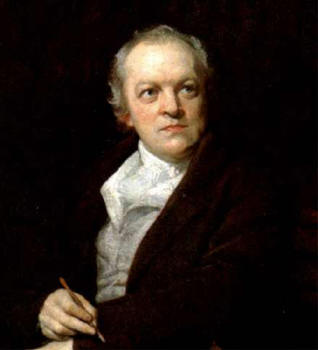
I can guess these guys were especially introspective but verbally expressive and poetically prolific during a prolonged episode, (snicker) - I know I'm like that.

William Blake (at left) for one, whose verse provided an inspiration for my artwork when I was a teen. Blake was a noted not just as a poet but as a painter as well .

The idol of his times, the passionate, extremely talented (and dreamy) George Gordon Lord Byron (at left). It's not hard to imagine, with his various neuroses as well as his swings from wanton "I will live as i want" behavior to world-weariness and back. The disturbed antiheroes Byron thought up were actually reflections of himself: confident, talented, attractive ... and disturbed.

Alfred Lord Tennyson
, Walt Whitman, and Robert Frost , some of whose verse I've loved and memorized, were all manic-depressive.

Ralph Waldo Emerson
too (whose quote happens to be emblazoned on the cover of my current journal). Samuel Taylor Coleridge , T.S. Eliot, Gerard Manley Hopkins and Charles Pierre Baudelaire were as well.
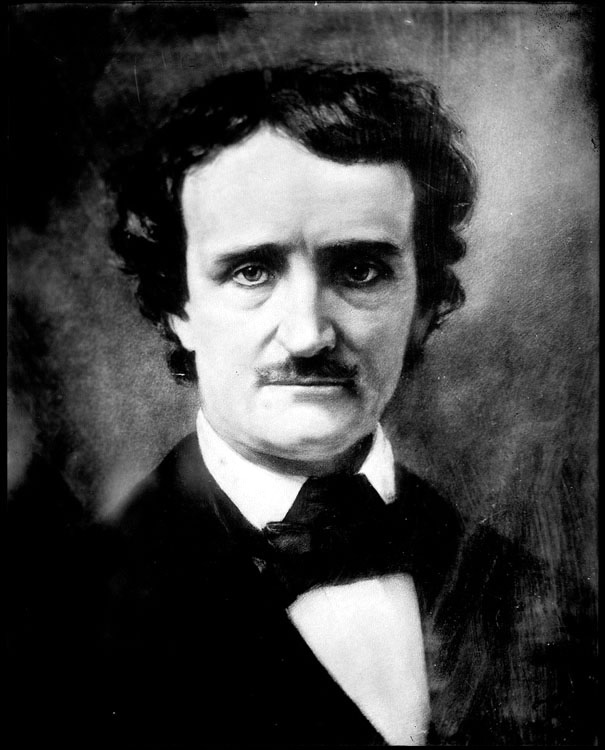
I can especially imagine Edgar Allan Poe (at left), with his dark, ingenious ruminations. I don't think anyone would disagree the guy had some serious depressions.

Sara Teasdale and Emily Dickinson too - who would have known?

Sylvia Plath obviously was, and clearly had her creative bursts during her melancholia.


NovelistsSamuel Langhorn Clemens, a.k.a. Mark Twain whose popular works are relatively easy to read and pleasant.

Victor Hugo
, who went for heavy, thought-provoking and almost-oppressive.

Virginia Woolf was called "crazy" - schizophrenic and bipolar, but it was those disorders, me thinks, that made her a literary genius.

F. Scott Fitzgerald is another noted novelist. His stories featured Byronic heroes too.

Others are Charles Dickens, Hans Christian Andersen, Robert Louis Stevenson, Ernest Hemingway and Leo Tolstoy.


Painters

One of the original Renaissance Men, Michelangelo (at left) was a multi-talented, prolific, brilliant, extremely inspired, iconic . . . indecent, impetuous, problematic, unpredictable, mood-swingy, disturbed bipolar.

The afflicted painter, Vincent Van Gogh had a conglomeration of disorders, including BMD. Van Gogh made his greatest works in the last year of his life, one after another in rapid succession through a wave of creative genius due to a manic episode. When he came down from the elevation and entered into a depression, he shot himself.

I know from bits of research and from personal experience that the transition from mania to depression is where the sufferer is most suicide-prone; if a bipolar isn't medicated and/or covered by caring relationships, a suicide is most likely to happen during the transition. I suppose that's what happened in Van Gogh's case.

Expressionist Edvard Munch of "The Scream" (at left) fame was another disturbed one. I first learned about him from a documentary I watched as a child; I instantly found him both fascinating and frightful. I don't know any of his other paintings, but The Scream has made a great impression on me. I'm drawn by the undulating unsettledness in his composition and the story (said to be) behind it. I recall pitying him for being manic-depressive - of course at that time I didn't know I was as well .

There's a female painter in this list - Georgia O'Keefe. I don't know much about her, but from what I remember from what I learned in Art History she had this preoccupation with vaginal forms.

The disturbed Jackson Pollock was also said to have bipolar, or something similar.

Just a thought: Why is it that most great artists were so tortured?

I have this theory that some of those in the artistic field probably would not have achieved everything they did if they weren't so disturbed. Though psychosis is not a prerequisite to genius, it can contribute. BMD is certainly debilitating, and I'm sure it was in a way for those artists. But I got to thinking that those artist and writers were so good because they were bipolar. Without the mood cycles, they probably would not have produced such dramatic work.

I know personally how bipolarity can swing one into great confidence and vision, wild creativity and inspired genius, as well as whirlwind productivity. So while the condition is inhibiting, on one end it is also inspiring.


Musicians / Composers
Both Wolfgang Amadeus Mozart (at left) and Ludwig Van Beethoven (far left) were manic-depressive. Their names have stood out throughout music history due to their ingenuity.

One thing remarkable about Beethoven was his ability to convey clear, powerful emotion. I find it funny that I was entranced listening to a Beethoven some time ago and I made a joke that I think he was bipolar, based on the sound of his music. I find out later that he really was.

Another bipolar German classical musician was Robert Alexander Schumann.

Frideric Handel was German composer, of the Baroque era.

Composer-pianists Franz Liszt, Frederic Chopin and Pyotr Tchaikovsky all had swings between elevation and depression. I imagine from his music that Tchaikovsky was a bit more manic.


Scientist

Isaac Newton.


Historical-Political FiguresAbraham Lincoln (at left) suffered greatly from the illness. From what I've read, he was more inclined toward depression. History has a deified image of Lincoln, but he had some serious flaws. But he wasn't just a pensive man as our kiddie history books say - Abe was gravely melancholy, severely depressive. His dark moods were so pervasive that it affected people around him. There were times he would be so depressed and fail to show up at important meetings or even get up from bed. He never overcame his depression; it even seems more like he embraced it- and forced others to.

I mused on the thought that someone that gloomy and inconsistent would be the type of employee most modern-day bosses would lay-off first, without consideration. This guy, whose face is on Mt. Rushmore for being one of the greatest-ever U.S. Presidents, was a moody, pessimistic depressive.

Another great immortalized on Rushmore is Theodore Roosevelt. He has been described by biographers to have periods of amazing energy - he walked over twenty miles and read an entire book a day. He was known to be aggressive and ostentatious, as well as prone to social anxiety and depression.

Winston Churchill is another person I quite admire. Remarkable statesman, lawman, orator, historian and writer. A hero of World War II, Dunkirk, Britain's finest hour. I learned that he was an artist too - how cool is that?! Many attribute his excellent abilities to his disorder, which he called his "black dog".

Napoleon Bonaparte, Joseph Stalin and Adolf Hitler had this condition in common. History doesn't hold very rosy images of them, but you've got to give them proper credit for their politico-military genius.

Enormous vision, egotistic ambition, megalomania, anger fits, messiah complex, disregard for others - those are all symptoms of severe elevation / mania. Napoleon, Stalin and Hitler all exhibited it from childhood. It can be very useful for authoritative leadership in small amounts, yeah? But when it isn't curbed, mania can trigger itself into destructive delusion.

Manic episodes cause one to be overconfident, even to absurd degrees; I personally have had those defiant "I will change the world" moments. It's not hard for me to imagine how someone with a good amount of intelligence, influence ad resources can actually channel all his megalomanic energy into making a mark in history. Lithium pills could have made a big difference for the whole world back then, huh?

Trivia: Did you know that Hitler was an artist as well? He made amazing watercolor paintings and charcoal drawings in his youth.

I have this theory that the so-called psychological defect that plagued Archduke Rudolph of the Hapsburgs was Bipolar Mood. He had a great, idealistic "I will save the world" phase to the point that he defied his father and despised the monarchy, and actually had plans on revamping all of Europe, but afterward he lost hope and spiraled downward into an alleged suicide.


Philosophers and Orators

Plato is said to have been manic-depressive, as derivable from what his student Aristotle said about him.

The most notable Christian speaker, Charles Haddon Spurgeon confessed of his moods in his book Dark Nights and Bright Days.

Mary Wollstonecraft, one of the authors of feminism, had a bit of tragedy.

Bipolars are very prone to tragedy. They're also real prone to repulsive behavior.


Modern-day Musicians and Celebrities

Substance addiction and abuse was the bane of many, including Marilyn Monroe, Amy Winehouse and the late great Jimi Hendrix.

90's icon Kurt Cobain (at left) didn't stick to his prescription; he instead chose medicate himself with other drugs. We all know how that ended. He also wrote a song called Lithium.

How about some people who are still alive today:

Gordon Matthew Sumner a.k.a. Sting (at left), who I've always thought is brilliant.

Adam Ant and Scott Weiland, whose unique, not-so-mainstream music helped soothe me through my youth.

Other rock icons: John Michael "Ozzy" Osborn, Axl Rose and Peter Gabriel.


Manic-depressives aren't always so dark.  Take comedian Ben Stiller for example (both his parents, actors Jerry Stiller and Ann Meara also were bipolar). Jim Carrey, Russel Brand and Stephen  Fry also are.


One modern artist that many including myself greatly admire is Tim Burton. I'm not sure how his BMD influences his output, but I think it's cute, the fact that he's bipolar.

Here's another film genius: Francis Ford Coppola.


Add to this long list Linda Hamilton, Catherine Zeta Jones, Richard Dreyfuss, Jean Claude Van Damme, Sinead O'Connor, Robert Downey Jr., Macy Gray, Carrie Fischer, Mel Gibson, Martha Stewart, Connie Francis, Larry Flint, Robin Williams, Marshall Mathers (a.k.a. Eminem), and media giant Ted Turner.  Okay, some of them aren't really good examples, but they're in there.


I'm tickled that I share bipolarity with a lot of the personalities that I happen to like or am inspired by - and I never even knew they had it until recently. Would that be a coincidence, or my tendency to be drawn to those with whom I have some sort of commonality without even knowing about it?

I share a condition with many geniuses, an "illness" so detestable but so able to stoke brilliance. Perhaps after my death, my own name could be added to this roster? I've got the bipolar part; I just have to work on the "well-known" part.

Haha
; better not stoke the mania.